Iron Force
- 3.0
- Rating
- 1.00M
- Installs
- Free
- Price
 Analysis by App-foxy
I spent time with Iron Force as a quick-action tank game, and my first impression was that it is easiest to understand when treated as a shared-device battle game rather than a deep military simulator. Developed by COOLFISH GAMES, it puts the emphasis on online multiplayer tank fights, short bursts of movement, aiming, and reacting under pressure. That makes it tempting for a household where different people want to pick up the same phone or tablet for a few matches, although the online focus also creates boundaries that are worth considering before installing it.
The game is free to download, which lowers the barrier for trying it with a family member or friend. Its Teen content rating matters, especially if the device is used by younger players. I would not hand it to a child simply because the tanks look cartoonish or the controls are easy to understand. The rating is a useful reminder that this is an action game built around combat, and that the person responsible for the device should decide whether its tone is suitable.
How Iron Force works on a shared device
I’d use this section to think through the practical side of handing Iron Force between people: whose session is active, when it is safe to pass the device, and how to avoid accidental taps while a battle is underway. A simple handover routine can make shared play feel relaxed rather than rushed. Next, I’d look at how its visual world gives those short online sessions their particular character.
You May Also Like

 Blood Strike: 2.5 Anniversary
Blood Strike’s Loadouts Turn Every Drop Into a Tactical Gamble
A close look at Blood Strike’s custom loadouts: how fast access to signature weapons reshapes its battle royale rhythm, rewards preparation, and narrows the gap between fights.

 Pandora - Music & Podcasts
Pandora’s Music Is Easy to Start, but Harder to Recover
Pandora’s strength is its low-effort path from a seed to a station. Its weak spot is how much confidence it asks you to place in connection, setup, and quiet recovery.

 8 Ball Pool
 Is Built on Rivalries, Rematches, and Routine
A close look at the rivalries, rematches, shared routines, and unanswered safety questions that turn a quick pool match into a persistent mobile community.

 Samsung Music
’s Quiet Strength Is Playing What You Already Own
Its reach comes less from spectacle than from dependable access to a personal library. That simplicity is both the app’s strongest retention engine and its ceiling.

 AccuWeather: Weather Radar
AccuWeather Review: A Quick, Clear Forecast for Everyday Decisions
For everyday plans, the best forecast is the one you can understand quickly. AccuWeather makes rain timing, radar, and local conditions easy to act on, with a few trade-offs.

 Hill Climb Racing
Why Hill Climb Racing Still Turns Crashes Into One More Run
A tiny car, a bumpy hill and one more upgrade: Hill Climb Racing keeps resurfacing because its simple chaos makes every near-miss feel personal.
More From Our News Desk



A practical game for passing the device around
In my experience, the strongest household use case is a casual turn-taking session. One person can play a few battles, then pass the device to someone else, without needing a long story campaign or a complicated setup ritual. That format works well when people are waiting, relaxing after dinner, or sharing a single tablet. The game’s identity is clear from the moment you start: you are there to drive a tank, find opponents, and survive an online fight.
That simplicity is useful, but it also means the game is not equally good for every kind of shared play. It is not a local split-screen experience where two people can sit beside each other and battle on one device. The action depends on online multiplayer, so each player is still participating in a wider match rather than directly controlling a private household session. If your main goal is a game that two people can play together without an internet connection, I would look elsewhere.
There is also a social difference between taking turns and coordinating. Passing the device around is straightforward, but discussing tactics while another person is playing can become distracting. A player who is trying to line up a shot may not appreciate several people giving instructions at once. I found that the best shared sessions are the ones where everyone agrees on a simple rhythm: one player finishes a battle, explains what happened, and then hands over the device.
Why the short-session mindset helps
Tank combat is a good fit for people who want immediate action rather than a slow introduction. You do not need to read a long narrative to know what you are doing. The appeal comes from movement, positioning, aiming, and choosing when to attack. That makes the game approachable for a relative or friend who does not normally play complex strategy titles.
At the same time, the online format makes interruptions more awkward. If someone needs the device urgently, a match may not be the right moment to take it away. I recommend agreeing on a handover rule before starting, especially when the device belongs to several people. A simple “finish the current battle first” arrangement avoids arguments and prevents a player from losing control at the worst possible moment.
This is one of the less obvious trade-offs of Iron Force: it feels casual because the basic idea is easy to grasp, but an online battle still demands attention. It is better for planned short sessions than for a situation where the device may be reclaimed at any second.
Setting boundaries before the first battle
Because the game is free, the first installation can feel harmless. The more important question is what happens after the initial download. Iron Force includes in-app purchases ranging from $0.99 to $99.99 per item. I would discuss that clearly before letting another household member play, particularly on a shared device connected to an adult’s payment method.
I do not see purchases as an automatic reason to reject the game, but they change how I would manage it. A player who is focused on improving a tank or keeping up with other competitors may feel pressure to spend. The sensible approach is to establish a no-purchase expectation unless the device owner has explicitly approved something. That conversation is more useful than assuming everyone will understand the difference between free access and optional spending.
A shared device also raises account-boundary questions. I would avoid treating one person’s progress, choices, or spending as if they automatically belonged to everyone else. If multiple people use the same installation, decide whose game profile is being used and who is responsible for it. The exact options available can depend on the device and platform, so I would check the sign-in screen carefully rather than guessing that separate household profiles are supported.
The most important household rule is simple: agree on account ownership and spending before anyone starts playing. That protects both the device owner and the player who may otherwise believe that a tank upgrade or other purchase is part of ordinary play.
Device sharing without mixing expectations
Iron Force is best treated as one person’s active session at a time. Passing the same device between players does not create a clean boundary by itself. A player may leave the game open, another person may tap through a screen, and the next match could begin under the wrong person’s control. I recommend ending each session at a recognizable stopping point and handing over the device only after checking whose account or progress is visible.
This is particularly important when a more experienced player shares with someone new. The experienced person may want to adjust settings, spend resources, or make decisions quickly, while the beginner needs time to learn the controls. Taking over can make the game look easier than it really is and can also create confusion about who made a choice. Letting each person manage their own session produces a fairer impression of the game.
For a household with one phone, I would also keep expectations realistic about notifications, calls, and battery use. Online play is not ideal when the device is needed for an urgent call or when the battery is already low. I would not begin a battle immediately before leaving home if the phone is also being used for navigation or communication. That is not a flaw unique to this game, but the multiplayer format makes interruptions more inconvenient than they would be in a purely offline puzzle game.
Coordinating play without overcomplicating it
The game can support a light form of coordination even when everyone is not playing at the same time. A household might agree that one person plays after school, another plays later, or that everyone gets a fixed turn during a shared break. The key is to coordinate access to the device, not to pretend that the game offers a private family tournament. Its central experience remains online combat against other players.
I found that talking about decisions after a match is more enjoyable than trying to coach every movement. A new player can explain where they struggled, while a more experienced player can suggest staying aware of cover, watching the battlefield, or avoiding reckless attacks. These observations are useful because tank games often punish rushing, but they still leave room for the beginner to develop their own feel for movement and aiming.
One practical tip is to use the first sessions as observation time. Let a new player watch a battle before taking the controls, then allow them to experiment without constant correction. This reveals whether they enjoy the action itself or only the idea of driving a tank. It also prevents a skilled player from turning a casual household game into a performance test.
Another useful trade-off is deciding whether to play for competition or relaxation. If everyone compares victories, the game may become tense quickly. If the goal is simply to try different approaches and share funny mistakes, the same battles feel more welcoming. Iron Force works better in the second mode for mixed-skill households, because online opponents may already provide enough pressure.
What the age rating means in everyday use
The Teen rating should guide the conversation about who uses the game, but it should not be treated as a complete parenting decision. A teenager may be comfortable with action combat and online competition, while a younger child may need more explanation or supervision. I would look at the individual player’s maturity, not just their ability to understand the controls.
Online multiplayer also changes the trust question. Even when the gameplay is easy to pick up, the player is entering a connected environment rather than a sealed single-player toy. I would explain that not every online interaction deserves a response and that personal information should never be shared with strangers. The game should be enjoyed as a battle experience, not as a reason to move conversations into unknown spaces.
For parents or guardians, the useful routine is to check the game together at the beginning, discuss purchases, and decide when it can be played. I would also make sure the player understands that losing a match is normal. Competitive action games can encourage repeated attempts, and that can quietly turn a short session into a much longer one. A clear stopping point helps the game remain entertainment instead of becoming a source of frustration.
The age context also affects whether I would recommend it as a gift. For a teenager who already enjoys online action games, Iron Force may be an accessible option to try without paying upfront. For a younger child, a parent should make the decision directly rather than relying on the tank theme to make the content seem harmless. For an adult who dislikes online competition, the Teen rating is not the main issue; the bigger concern is whether they enjoy fast, combat-focused sessions.
Performance expectations and version context
The current version is 4.14.0, and the game requires Android 6.0 or later. That makes checking the household device important before planning a shared session. A phone that is used by several people may be older, especially if it is kept as a spare or passed down. I would confirm compatibility before promising the game to someone who has been waiting to play.
Since this is an online title, a stable connection is part of the experience. I would avoid judging the game after a single poor session on a weak network, but I would also avoid assuming that every household connection will provide a smooth battle. If the device regularly moves between home, school, travel, or public networks, the quality of play may vary. That makes Iron Force less dependable than an offline action game for a long trip.
The game has been available since Apr 8, 2014, and its continued presence suggests that it has had time to build an audience. It has passed 1 million installs, with an average rating of 3.0 from around 86 thousand ratings and roughly 20 thousand written reviews. I read that combination as a sign of a recognizable but uneven experience: plenty of people have tried it, yet the rating does not suggest universal satisfaction.
I would not let the install total decide whether it belongs on a shared device. Popularity can tell you that the game is established, but it cannot tell you whether your household will enjoy the controls, online pace, or purchase structure. The more useful test is whether the first few sessions feel entertaining without pressure to spend or play longer than intended.
How it compares with other choices
Compared with offline arcade games, Iron Force offers a more competitive and less predictable experience. Human opponents, or at least an online match structure, create tension that a fixed set of computer challenges may not provide. The downside is that you need connectivity and must accept the rhythm of multiplayer combat. If you want something that can be played quietly during a commute with no connection worries, an offline alternative is likely better.
Compared with deep tank simulators, this game is easier to approach. I would choose it for someone who wants the recognizable fun of tank battles without studying realistic controls or detailed military systems. The trade-off is depth: players looking for careful simulation, extensive historical detail, or a slow tactical campaign may find the action too immediate.
Compared with other online action games, its tank focus gives it a clearer identity than a general shooter. That can be a strength for a player who specifically likes armored vehicles. It may be a poor match for someone who prefers character movement, close-range combat, or a story-driven adventure. The right alternative depends less on the free price and more on whether tanks are genuinely the part of action gaming that holds your attention.
One non-obvious consideration is the difference between shared enthusiasm and shared progress. A family can enjoy discussing battles, but that does not mean everyone will enjoy using one player’s established progress. If the household wants equal ownership, a game designed around separate local profiles may be more convenient. Iron Force is better when the device has a clear primary player or when everyone is comfortable treating sessions as informal turns.
Who should try it, and who should skip it
I would recommend giving Iron Force a chance if you like quick online tank battles, want a free starting point, and are comfortable managing optional purchases responsibly. It is also worth trying for a teenager or adult who enjoys learning through repeated matches rather than following a long campaign. The controls and premise are approachable enough for casual experimentation, while the online setting gives each battle a competitive edge.
I would be more cautious if you are looking for a completely offline game, a calm experience for very young children, or a strict no-spending environment on a shared device. I would also skip it if you dislike games where progress and enjoyment may be connected to repeated online play. The average rating of 3.0 is another reason to keep expectations measured: this is not a recommendation I would make blindly to everyone.
For a household, I would install it only after agreeing on three things: who is responsible for the account, whether purchases are allowed, and when the device can be used. Those decisions solve more practical problems than any gameplay tip. Once the boundaries are clear, the game can serve as a compact shared activity rather than becoming a disagreement about access or spending.
My household verdict
Iron Force works best as a free-to-try, online tank game for a clearly defined player, with occasional turn-taking among people who understand the boundaries. I like its direct premise and the way it gets to armored combat without demanding that a newcomer learn a large fictional world. The ability to pass the device around makes it a plausible casual household game, but only when everyone remembers that each battle is connected and attention matters.
My reservations are equally practical. The Teen rating requires adult judgment for younger users, the in-app purchase range calls for a firm spending conversation, and the multiplayer structure makes interruptions more troublesome than they would be in an offline game. A shared device can work, but it needs a little organization around account ownership and handovers.
After weighing those points, I see Iron Force as a reasonable choice for tank fans who want accessible online action and do not mind testing a game with a mixed reputation. I would recommend trying it during a controlled session rather than presenting it as a guaranteed family favorite. If the first battles are enjoyable without pressure to buy or keep playing, it can earn a place in the household rotation. If the device needs stronger privacy boundaries, offline access, or a gentler experience for younger players, another category of game would be the wiser choice.
FAQs for Iron Force
01What is Iron Force and how does the gameplay work?
Iron Force is a multiplayer tank battle game focused on fast-paced armored combat. After choosing and upgrading a tank, you enter online matches against other players, move around compact battle arenas, collect power-ups, and attack opponents while trying to complete the objective. Matches are designed to be relatively quick, making the game suitable for short play sessions as well as longer upgrade-focused sessions.
02Can I play Iron Force without an internet connection?
Iron Force is primarily designed as an online multiplayer game, so a stable internet connection is generally required for its main battles and competitive features. Offline access may be limited or unavailable, depending on the version and device. Before downloading, players should also consider that connection quality can affect matchmaking, responsiveness, and the overall experience during real-time tank battles.
03Is Iron Force free to download and play?
Iron Force can generally be downloaded and played without an upfront purchase, but it may include optional in-app purchases. These purchases can provide premium currency, upgrades, cosmetic items, or other conveniences that may speed up progression. You can play without spending money, although advancing tanks and competing against more developed opponents may require additional time and regular gameplay.
04What customization and upgrade options are available in Iron Force?
The game offers progression systems that allow players to improve their tanks and adapt them to different combat preferences. Depending on the available version, upgrades can affect attributes such as firepower, armor, mobility, and special abilities. Players should expect to manage resources carefully, because improving one vehicle or weapon may require choosing between several competing upgrade priorities.
05Is Iron Force suitable for children and does it require a powerful device?
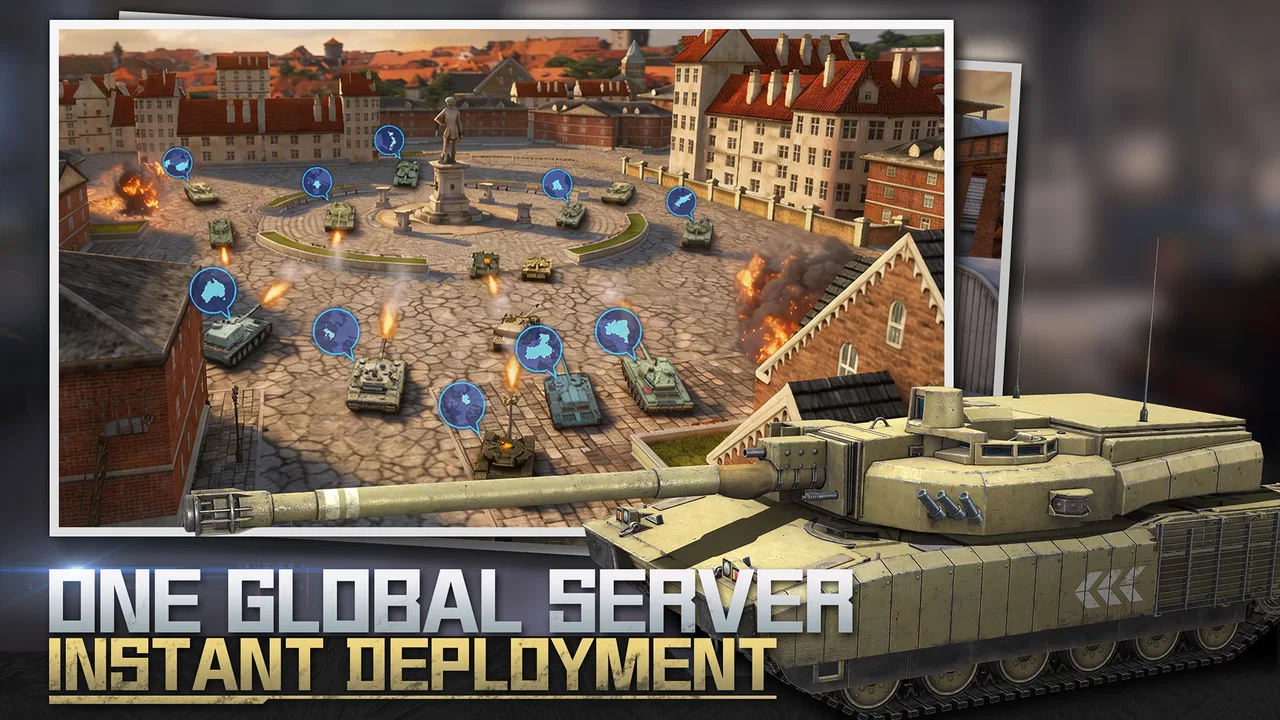
Iron Force uses cartoon-styled tank combat rather than realistic battlefield simulation, but it still includes shooting, explosions, competition, and online interaction. Parents should review the store rating, privacy information, and purchase settings before allowing children to play. The game is usually accessible on many modern phones, although older devices may experience longer loading times, reduced performance, or compatibility limitations.
Pros
- Fast-paced naval battles are easy to learn and enjoyable in short sessions.
- Multiple warships offer different playstyles and combat roles.
- Online matchmaking keeps battles competitive and unpredictable.
- Upgrade options provide a clear sense of progression over time.
- Colorful 3D visuals make the action easy to follow on mobile screens.
Cons
- Progress can feel slow without frequent play or spending.
- Some upgrades and resources may encourage in-app purchases.
- Matchmaking may place newer players against stronger opponents.
- Battles can become repetitive after extended play sessions.
- An internet connection is required for the main multiplayer experience.

Iron Force
Gallery